
Can you sell land in Sri Lanka while living overseas by signing a Power of Attorney (POA)? In many situations, a properly prepared and registered Power of Attorney can allow an authorised person in Sri Lanka to act for you. But a document signed abroad is not automatically suitable for a Sri Lankan land transaction merely because a notary public witnessed it. The execution route, wording, identity documents, registration requirements and the requirements of the notary handling the sale all matter.
This guide explains the general legal framework for a Power of Attorney signed outside Sri Lanka and intended to be used for a land sale. It is especially useful for Sri Lankan property owners living in the United Kingdom or another country who cannot travel to Sri Lanka to complete the transaction.
Key point: Sri Lanka’s Registrar General’s Department says Powers of Attorney executed in Sri Lanka or abroad must be registered, and that a document executed abroad should be submitted for registration within three months of signing. Confirm the current requirements and the correct signing route before executing the document.

Photo: Scott Graham / Unsplash. Illustrative only; not a depiction of a specific Sri Lankan transaction.
Contents
- What a Power of Attorney does—and does not do
- Can an overseas owner authorise a land sale?
- Does a foreign notary’s signature suffice?
- Foreign-notary procedure under the 2022 amendment
- Signing before a Sri Lankan High Commission or Embassy
- Witnesses, identity documents and the 2022 and 2024 amendments
- Registration in Sri Lanka and the three-month period
- Drafting powers for a land sale safely
- Common mistakes and a practical checklist
- Frequently asked questions
1. What does a Power of Attorney do?
A Power of Attorney is a written authority by which one person (the grantor) authorises another person (the attorney or donee) to perform specified acts on the grantor’s behalf. In a land transaction, it may authorise the attorney to deal with a particular property, sign specified documents, appear before a notary, or complete other acts clearly described in the instrument.
A POA is not itself a deed transferring ownership of the land. The transfer must still be completed through the legally required conveyancing process. The authority given to the attorney must cover the acts they are asked to perform, and the notary handling the transfer must be satisfied that the POA is legally usable for the proposed transaction.
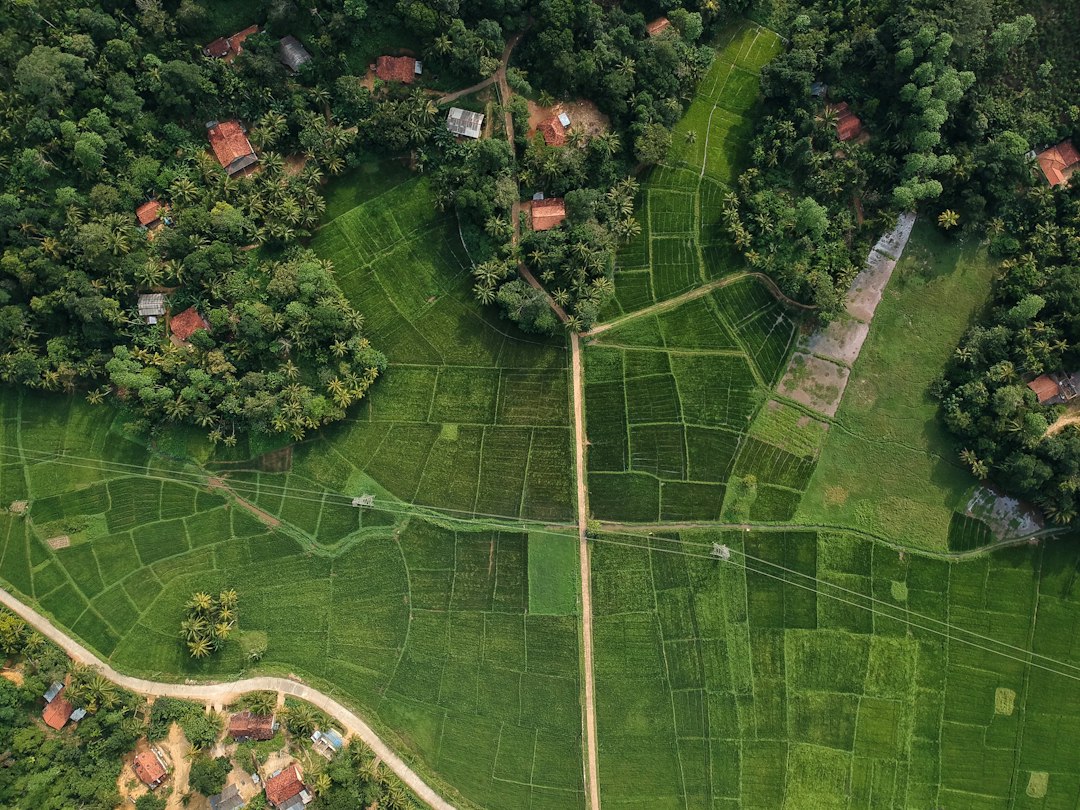
Photo: oleks film / Unsplash. Illustrative landscape; not a survey plan or title record.
2. Can a person living abroad authorise someone in Sri Lanka to sell land?
Potentially, yes. Residence abroad does not by itself prevent a landowner from authorising a representative. The practical question is whether the particular POA has been properly executed, attested, registered and drafted for the intended sale, and whether the grantor has the legal capacity and authority to deal with the property.
Before preparing the document, identify the exact land and the intended transaction. Check the deed, survey plan, extent, lot number, land registry details and the grantor’s ownership share. If the land is jointly owned, inherited, subject to a mortgage, held under a State permit or grant, or affected by litigation, additional legal questions may arise. A general POA should not be assumed to override restrictions attached to the property or the rights of co-owners.
3. Does a Power of Attorney signed before a foreign notary automatically work in Sri Lanka?
Do not assume that a foreign notary’s signature alone is enough. The Powers of Attorney Ordinance (Chapter 122), as amended, governs the form and registration of Powers of Attorney used in Sri Lanka. Section 2 of the Powers of Attorney Ordinance, as amended by the Powers of Attorney (Amendment) Act, No. 3 of 2024, recognises execution abroad before an Ambassador, High Commissioner, Diplomatic Officer, Consular Officer, or a person authorised to attest a Power of Attorney under the law of that country. The 2024 Act changed the earlier wording about execution before two witnesses and an Ambassador. However, the Registrar General’s Department’s current webpage still refers to two witnesses for foreign-executed POAs. Because the statute and published webpage appear not to be fully aligned on this point, confirm the witness formalities with the Registrar General’s Department and the Sri Lankan notary handling the land transfer before signing.
The precise route matters. A notary public or solicitor may be authorised to attest documents under the law of the country where the POA is signed, but the Sri Lankan receiving notary and the Registrar General’s Department may need to see the required legalisation, authentication, witness execution and supporting documents. Do not treat “notarised” and “accepted for use in a Sri Lankan land transfer” as interchangeable descriptions.
The 2024 Powers of Attorney (Amendment) Act, No. 3 of 2024, amended the wording of the foreign-execution provisions in the Ordinance. The Registrar General’s published service guidance still describes a two-witness signing process for documents executed abroad. Because the statutory wording and administrative guidance should be read together, confirm the applicable execution formalities with the Sri Lankan notary who will handle the sale and the relevant registration office before signing—particularly if the proposed route is a foreign notary without consular attestation.
Important procedure: a Power of Attorney attested by a foreign notary under the 2022 amendment
This is a separate route from signing a POA before a Sri Lankan Embassy or High Commission. Under the Powers of Attorney (Amendment) Act, No. 28 of 2022, section 2 of the Ordinance recognises a POA executed outside Sri Lanka before a person authorised to attest a POA according to the law of the country where it is executed. The wording was amended again by the Powers of Attorney (Amendment) Act, No. 3 of 2024. The foreign-notary route should therefore be assessed under the statutory wording and the notary’s authority in that country; a Sri Lankan High Commission certificate should not automatically be described as a universal extra statutory requirement for every POA.
Important practical caution: the Registrar General’s Department’s published webpage still says a POA executed abroad should be signed before two witnesses and before one of the listed officials or a person authorised under that country’s law. The 2024 amendment changed the wording of the statutory definition regarding witnesses, so the webpage appears not to reflect that change fully. Before signing, ask the Registrar General’s Department and the Sri Lankan notary who will handle the land transfer to confirm in writing whether witnesses are required for your particular execution route. Do not rely solely on a general article or an overseas notary’s assumption.
Step-by-step procedure for the foreign-notary route
- Ask the Sri Lankan conveyancing notary to prepare or approve the draft first. Explain that it will be signed abroad and used to sell land in Sri Lanka. Do not sign a generic POA before the receiving notary checks it.
- Describe the land precisely. For a transaction within section 2 of the Prevention of Frauds Ordinance, section 3A(3) of the Powers of Attorney Ordinance requires the foreign-executed POA to identify the land or land parcel by its description, boundaries and extent, and, where the land is already registered, to include the relevant volume and folio reference. The notary should check the deed and survey plan for the correct description.
- Confirm the foreign attestor’s legal authority. Execute the POA before a notary public or other person who is legally authorised under the law of that country to attest a Power of Attorney. Keep evidence of the attestor’s status and follow the applicable local signing, witnessing, certification and authentication rules. A stamp saying “notarised” should not be assumed to prove every requirement without checking.
- Complete the foreign-execution identity documents. For the land-transaction route under section 3A(3), the grantor’s passport biodata-page copy must be signed by the grantor, and the attorney’s passport, National Identity Card or driving-licence copy must be certified by a notary public. The Registrar General’s published registration checklist also asks for notary-certified identity-document copies for the grantor and attorney. Follow the receiving office’s current checklist and the Sri Lankan notary’s instructions.
- Prepare the registration package. The Registrar General’s Department currently lists the original POA, a true copy certified by a notary public, the affidavit in the Schedule to the 2022 Amendment Act, certified identity-document copies for the grantor and attorney, and—where the POA was drawn and attested abroad—the grantor-signed passport biodata-page copy.
- Submit it for registration within three months of execution. The RGD says a POA signed abroad must be submitted for registration within three months from the signing date. Keep proof of submission and obtain the registration details. Do not leave the registration process until the scheduled date of the land transfer.
- Have the Sri Lankan transfer notary verify the registered POA. Before the deed of transfer is signed, the notary should confirm that the authority covers the specific transaction, that registration is complete and that the POA has not been revoked or cancelled.
Is a Sri Lankan Embassy or High Commission certificate still needed?
Do not confuse three different matters: (1) execution before a person authorised under the law of the country where the POA is signed; (2) any authentication or legalisation required to establish the foreign attestor’s authority or satisfy the receiving office; and (3) a Sri Lankan Embassy/High Commission’s own consular attestation service. They are not necessarily the same step.
The Ministry of Foreign Affairs says its POA attestation service accepts documents signed or declared by Sri Lankan citizens or Sri Lankan corporate citizens; its guidance separately says POAs for foreign nationals must be verified by the relevant embassies and that prior approval may be needed in the circumstances described on its website. This is guidance about the Ministry’s consular attestation service. It should not be read, without further legal analysis, as cancelling the separate statutory route for execution before a person authorised under the law of the country of execution.
Accordingly, a foreign national or a Sri Lankan citizen living abroad who wants to use the foreign-notary route should have the Sri Lankan receiving notary confirm the exact authentication evidence accepted for that country and the current RGD registration practice before signing. Do not assume either that a High Commission certificate is always mandatory or that a foreign notary’s stamp will always be accepted without further evidence.
4. Should you sign at a Sri Lankan High Commission or Embassy?
A Sri Lankan citizen living overseas may be able to sign a POA before an authorised officer at the Sri Lankan Embassy or High Commission in the country of residence. The Ministry of Foreign Affairs states that a Sri Lankan citizen living abroad can sign a Power of Attorney at the Sri Lankan Embassy in that country before an authorised officer under the Consular Act.
However, consular services are subject to eligibility, appointment, identity and document requirements. For example, the Sri Lanka High Commission in the United Kingdom publishes specific instructions for Sri Lankan and dual nationals, and a separate route for foreign nationals. Its current guidance says eligible Sri Lankan nationals should not sign the document in advance when signing before a consular officer. If using a UK solicitor route, it describes legalisation by the UK Foreign, Commonwealth & Development Office followed by submission to the High Commission for attestation in the circumstances specified on its website.
These are route-specific instructions, not a universal statement that every overseas POA must bear a High Commission certificate. Check the rules of the relevant Sri Lankan mission and the registration office for the country and execution method you intend to use.
5. What changed under the 2022 and 2024 amendments?
The Powers of Attorney (Amendment) Act, No. 28 of 2022 changed important requirements concerning execution and registration. The Powers of Attorney (Amendment) Act, No. 3 of 2024 subsequently amended parts of that framework, including provisions dealing with execution abroad and cancellation or revocation.
The Registrar General’s Department currently lists the following items for registration:
- The original Power of Attorney.
- A copy of the POA certified as a true copy by a Notary Public.
- The affidavit specified in the Schedule to the 2022 Amendment Act.
- Notary-certified copies of the grantor’s and attorney’s National Identity Card, passport or driving licence.
- For a POA drawn and attested abroad, a copy of the grantor’s passport biodata page certified (signed) by the grantor personally.
This is the published general list. A particular case or execution route may require additional evidence or clarification. Verify the list immediately before submission, and do not rely on an old checklist or an agent’s informal assurance.
6. Where and when must the POA be registered?
The Registrar General’s Department says every Power of Attorney signed within Sri Lanka or in another country must be registered with the Department. Its published time limits are:
- Signed in Sri Lanka: submit for registration within one month of signing.
- Signed outside Sri Lanka: submit for registration within three months of signing.
The Department states that qualifying local and foreign POAs may be submitted to any Zonal Office or District Assistant Registrar General’s Office, irrespective of the attorney’s residential address. Confirm the applicable office, current forms, fees and submission arrangements directly with the Department.
Registration should not be left until the day the sale deed is due to be signed. Allow time for international postage, corrections, certified copies and any questions raised by the receiving office or notary. If the three-month period is approaching or has passed, obtain legal advice and official clarification rather than assuming that the document can simply be used late.

Photo: Cytonn Photography / Unsplash. Illustrative only; do not use sample imagery as a substitute for checking the actual documents.
7. Draft the authority specifically for the proposed land sale
A POA intended for a land sale should be prepared with the Sri Lankan conveyancing notary or lawyer who will handle the transfer. Avoid downloading a generic form and signing it abroad before the receiving professional has checked it.
Depending on the transaction, the document may need to identify:
- The grantor and appointed attorney using names and identification details consistent with their official documents.
- The land by its deed description, lot number, survey plan, extent and relevant registration details.
- The acts authorised, such as negotiating, signing the deed of transfer, producing documents or completing specified registration steps.
- Any limits on the authority, including whether the attorney may receive sale proceeds, agree to a price, appoint another representative or deal with more than one property.
- The period of authority and how revocation or cancellation is to be handled.
These are drafting considerations, not a statutory template. The right wording depends on the property, ownership structure and intended transaction. A broad authority can create avoidable risks; a narrow authority may fail to cover a step the attorney needs to complete.
8. Extra checks before selling land through an attorney
Before the sale proceeds, the grantor and the attorney should make sure that the underlying title and transaction are ready:
- Check the original deed and the chain of title, not only a photocopy supplied by a buyer.
- Confirm that the grantor owns the interest being sold and that any co-owner’s consent or separate authority required for the transaction is addressed.
- Check for mortgages, leases, caveats, court orders, pending disputes or restrictions on alienation.
- Ask the receiving notary to confirm that the POA covers the precise transfer and is registered in the required manner.
- Agree in writing how the sale price will be paid, to whom, and what receipts or evidence must be retained.
- Keep secure copies of the signed POA, registration evidence, correspondence and the completed transfer deed.
For further background, read HICONT’s guides on checking land title in Sri Lanka before buying property, reading a deed of transfer and Power of Attorney registration, risks and cancellation.
9. Common mistakes to avoid
- Signing too early: the receiving notary has not reviewed the draft or execution route.
- Assuming a foreign notary stamp settles everything: the required attestation or legalisation steps have not been checked.
- Missing the registration period: the document is sent to Sri Lanka late or the process is started too close to completion.
- Using a generic or vague description of the land: the authority does not match the deed and survey plan.
- Giving unnecessarily wide powers: the attorney can do more than the grantor intended.
- Ignoring cancellation: the grantor does not understand the formal process for revoking a registered POA or notifying the relevant parties.
- Failing to verify the attorney: original identity details, contact information and the intended handling of funds are not checked.
10. Practical checklist before you sign overseas
- Choose the Sri Lankan notary or lawyer who will handle the land transfer.
- Send that professional the deed, survey plan, identity details and proposed transaction information.
- Agree the draft wording and the overseas execution route before signing.
- Confirm the witness and attestation formalities with the Sri Lankan receiving professional and, where applicable, the relevant Embassy or High Commission.
- Prepare the prescribed affidavit and certified identity documents required for registration.
- Arrange for the original POA and supporting documents to reach the correct office in time for registration within the applicable period.
- Obtain and retain registration confirmation, then confirm with the receiving notary that the document is ready to be used for the transfer.
Frequently asked questions
Can I sell my Sri Lankan land from Scotland without travelling to Sri Lanka?
A properly executed and registered POA may allow an authorised person to complete specified steps on your behalf. Whether the proposed document will be accepted depends on its form, the execution and attestation route, the land title and the transaction. Confirm the details with the Sri Lankan notary handling the transfer before signing.
Is a Scottish notary’s signature alone enough?
There is no safe universal yes-or-no answer without checking the notary’s legal authority, the applicable Sri Lankan execution requirements, any required legalisation and the registration office’s requirements. The Registrar General’s guidance recognises a person authorised to attest under the law of the relevant country, but do not assume that a notary’s stamp alone completes every step.
Can a foreign-notary-attested POA be registered without a Sri Lankan High Commission certificate?
The 2022 amendment recognises execution before a person authorised to attest a POA under the law of the country where it is signed, and the 2024 amendment changed the statutory wording about witnesses. That is distinct from the Sri Lankan Ministry of Foreign Affairs’ own consular attestation service. Whether further authentication evidence is required in a particular case must be checked with the Sri Lankan notary and Registrar General’s Department. The RGD webpage still mentions two witnesses, so confirm that point before signing.
Is High Commission attestation mandatory for every POA signed abroad?
The published Sri Lankan rules include more than one possible execution route, including consular officers and persons authorised under the law of the country where the document is signed. The High Commission may publish additional instructions for its own services and for particular applicants. Confirm the route that applies to your circumstances rather than assuming that consular attestation is always required—or never required.
How long do I have to register a POA signed abroad?
The Registrar General’s Department currently says it must be submitted for registration within three months from the date of signing. Verify the current requirement and allow time for delivery and corrections.
Does registering the POA transfer ownership of the land?
No. The POA authorises the attorney to act within its terms. The land transfer itself must still be completed and registered in the legally required manner.
Official sources and further reading
- Registrar General’s Department: Registration of Power of Attorney — execution routes, time limits and registration documents.
- Powers of Attorney Ordinance (official RGD copy).
- Powers of Attorney (Amendment) Act, No. 28 of 2022.
- Powers of Attorney (Amendment) Act, No. 3 of 2024.
- Sri Lanka Ministry of Foreign Affairs: Affidavits and Power of Attorney.
- Sri Lanka High Commission in the UK: Legalisation and attestation guidance.
Legal information disclaimer: This article provides general information about Sri Lankan law and official administrative guidance as available in October 2026. It is not legal advice for a particular transaction. Requirements can depend on the country of execution, the applicant’s nationality, the land title and the proposed sale. Obtain transaction-specific advice from a Sri Lankan attorney-at-law or notary and verify the latest requirements with the Registrar General’s Department and relevant consular office.