
“Just sign here as a witness.” It sounds harmless. Sometimes it is. Sometimes the signature sits underneath a document dealing with money, property, a loan, a vehicle, a power of attorney, a family arrangement or another important legal transaction.

The safest rule is simple: never treat a witness signature as meaningless just because you are not one of the main parties. What your signature represents depends on the document, the wording and the circumstances in which you sign.
1. First ask: “What exactly am I witnessing?”
Before signing, read the document or at least the portion that explains the transaction and the witness clause. A witness may be signing to attest that a person signed or executed a document in their presence. That does not automatically mean the witness personally guarantees every statement written in the document.
But you should not assume that distinction without reading the actual instrument. Different documents can create different responsibilities and formal requirements.
2. Do not sign a document you have not been allowed to read
If someone puts a page in front of you and says, “You don’t need to read it; you are only the witness,” stop.
You do not need to become a lawyer before witnessing a signature. But you should be able to understand what document is being signed, who is signing it and what your own signature is intended to certify.
3. Check who is actually signing
Where identity matters, pay attention to the identity of the person signing. If you genuinely do not know the person or cannot reasonably identify them, do not casually sign an attestation simply because another person tells you to.
This is particularly important where the document concerns property, substantial money, a power of attorney or another transaction with serious consequences.
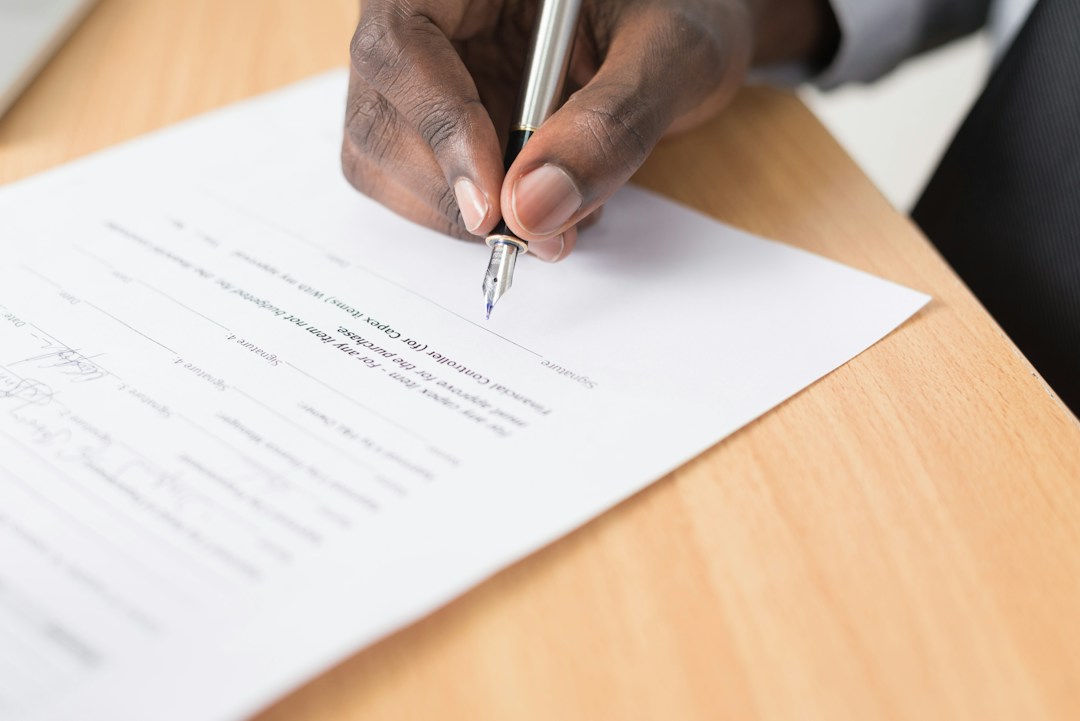
4. Never sign a blank or incomplete document
This is one of the easiest rules to remember. Do not put your signature on a blank page or a document that is materially incomplete with the promise that the rest will be filled in later.
Once your signature is on the page, proving exactly what you intended to witness can become much harder if the document is subsequently altered.
5. Ask what your signature means
If the wording is unclear, ask the person preparing the document: “What does my signature as witness certify?”
If the answer is vague—“Nothing, it is just a formality”—that is a reason to slow down, not a reason to sign faster.
6. A witness is not automatically a guarantor
Being a witness and being a party, surety or guarantor are different concepts. A witness should not casually accept additional obligations by signing another section of the document that creates a promise, guarantee or undertaking.
Read the signature block. Make sure you are signing in the capacity stated for you.
7. Do not certify facts you did not personally know
Suppose a document says that a person owns a property, owes a particular amount, or has made a particular declaration. You should not assume that witnessing a signature makes you an independent verifier of every underlying fact.
At the same time, if the witness clause or another part of the document expressly asks you to certify a fact, that is different. If you cannot truthfully make that certification, do not sign it.
8. Be especially careful with property and powers of attorney
Property documents and powers of attorney can have consequences long after the signing ceremony. If you are asked to witness one, take the time to understand the nature of the document and the role assigned to you.
HICONT’s guides on powers of attorney in Sri Lanka and land-purchase due diligence explain why important property documents should not be treated as casual paperwork.
9. What if you already signed?
Do not panic and do not immediately assume that the signature has no effect. Keep a copy or photograph of the document if you are lawfully entitled to do so, record when and where you signed, and write down who was present.
If you later discover that the document was materially different from what you were told, or that your signature is being used to support a disputed transaction, obtain legal advice promptly. Do not attempt to “fix” the document yourself.
10. Keep your own record
For a significant document, a witness can keep a simple private record of:
- Date and place of signing.
- Name of the person whose signature was witnessed.
- Type or title of the document.
- Other people present.
- Any identification process actually carried out.
- Whether the document appeared complete when signed.
This record is not a substitute for the document itself, but it can help refresh your memory if questions arise much later.
HICONT’s seven-question pause before signing
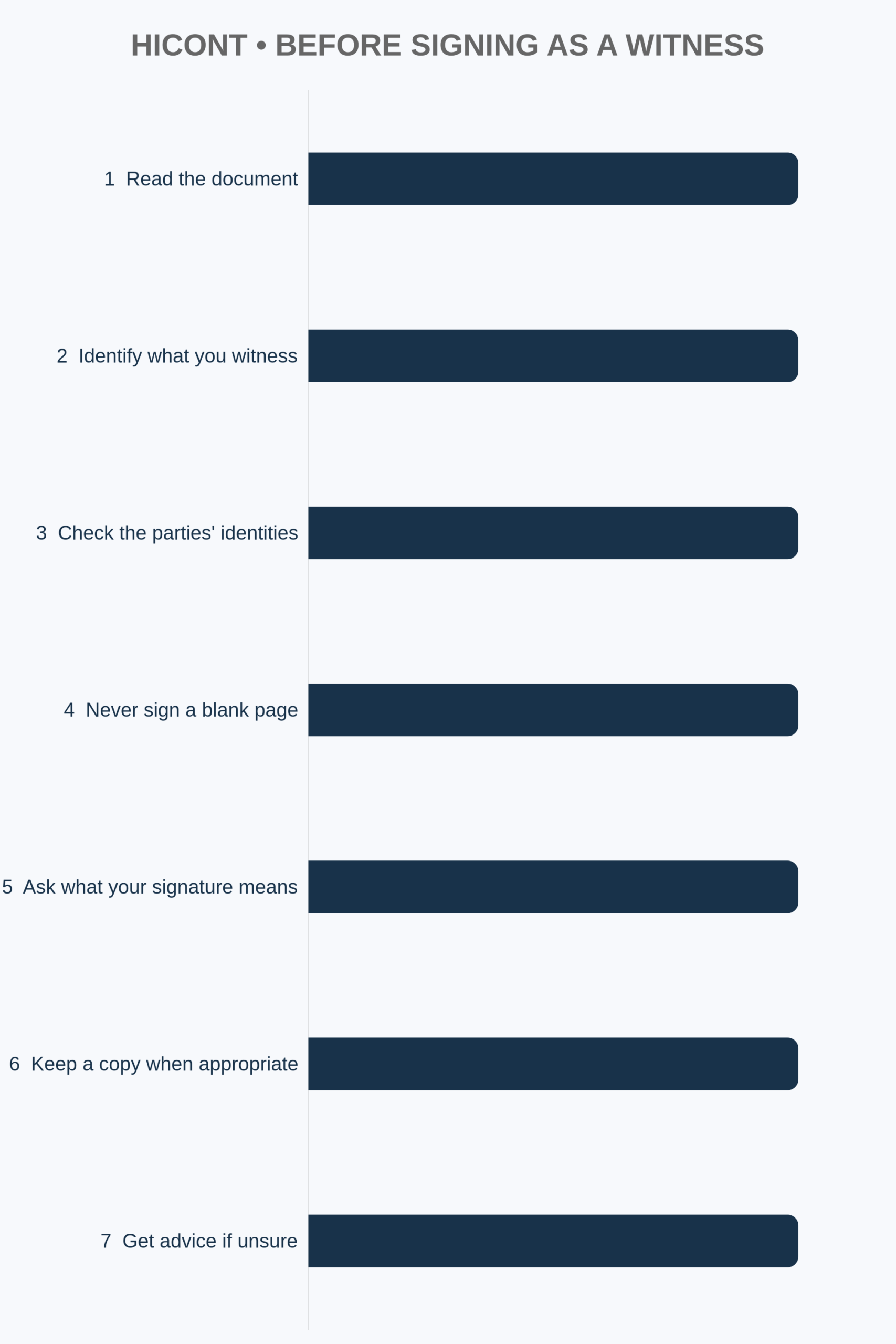
- What document am I witnessing?
- Who is signing?
- Have I been allowed to read it?
- Is the document complete?
- What exactly does my signature certify?
- Am I signing only as a witness?
- Would I be comfortable explaining this signature later?
Why “I was only the witness” may not end the conversation
If a dispute later develops, a witness may be asked what happened at the signing. The witness may be questioned about who was present, whether the signature was made in their presence, what document was signed and what they observed.
That is why accuracy matters. A good witness does not invent certainty. If you do not remember something, say that you do not remember rather than filling the gap with a guess.
Special warning for family and friends
Many people sign as witnesses because a relative, neighbour or friend asks them for a favour. That is understandable. But personal trust is not a substitute for understanding the document.
You can be helpful without becoming careless. Read. Ask. Confirm your role. Then sign only if you are genuinely comfortable with what you are witnessing.
Final takeaway
A witness signature should be treated as a deliberate legal act, not as decorative ink.
If someone asks you to witness an important document, take a few minutes to understand the document, the signer, your role and what your signature is actually saying. If anything remains unclear, independent legal advice before signing is usually far cheaper than trying to explain an unwanted signature later.
Legal note: This is general legal information, not advice on a particular document. Formal requirements can differ between documents and transactions, especially where property, powers of attorney, guarantees or other regulated instruments are involved.
Official reading: Ministry of Justice Legal Education